When a repair doesn't make sense, we install a new approved backflow preventer, test it, and file the report with your district.
- PriceFree quote
- Time2–4 hours
- TestIncluded
- FilingIncluded
Want to get on the schedule? Call or book online.
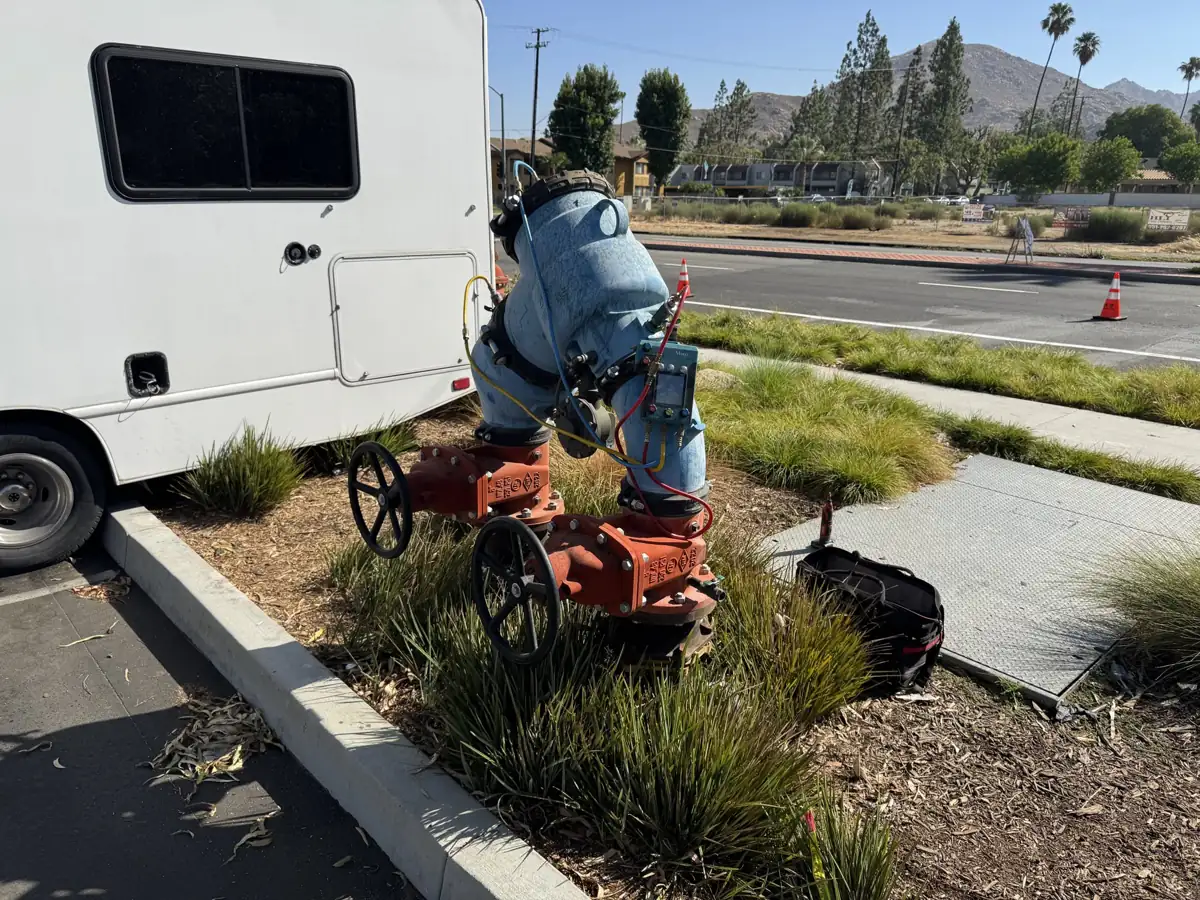
Times we recommend replacing
- Visible cracks or leaks from the body
- The device is missing
- No rebuild kit exists for your model
- Your property's use changed and needs a different type
If a repair will get you through, we'll tell you.
Signs a device should be replaced
Most failed devices can be repaired, but not all of them. The clearest case is a cracked body, usually from a freeze or an impact. Brass and bronze bodies can't be patched reliably, so the device has to come out.
Age is another factor. Some older models are no longer made, and parts are hard or impossible to find. Others have been rebuilt so many times that the seats and internal surfaces are worn past the point where a new kit will hold.
Repeat failures are a sign too. If a device fails year after year even after repairs, replacing it often costs less over time than another round of parts and labor.
Stolen devices
Scrap thieves cut brass backflow devices off water lines all over Southern California. What's left is an open pipe and, often, water running into the yard or street.
Close the meter if water's still flowing and call us. Common sizes can usually be replaced the same day, tested on the spot, and reported to your district.
To keep it from happening again, we'll suggest a locking cage on a concrete pad. It costs far less than another replacement.
Upgrades and changes of use
A device can work perfectly and still need replacing if it's the wrong type for how the water is used now. When a shop becomes a restaurant or an office becomes a clinic, the district may require an RP in place of a double check.
District reviews sometimes catch a device that was never correct for the connection. Those get replaced with the type the hazard calls for.
Before quoting, we check the district's requirements so the replacement is approved without a second round.
What replacement involves
Replacement starts with confirming the right type and size. In many cases it's the same as what's there, but not always. We'll check whether the existing setup meets current rules for placement, height and clearance, since moving or raising the device during replacement is easier than doing it later.
The water is shut off, the old device comes out, and the new one goes in with new fittings as needed. For most homes and small businesses, that takes two to four hours.
Then the new device is tested, and the passing report is filed with your water district. You get a copy. The device's annual due date usually resets from the date of the new test.
Pricing and quotes
Replacement pricing depends on the device type, size and how much fitting work is needed. A 3/4-inch or 1-inch device on a home costs far less than a 4-inch fire line assembly, and an easy swap costs less than one that has to be raised or moved.
You'll get a free quote before any work starts. The quote includes the device, labor, the test and filing the report with your district.
If you're comparing repair against replacement, we'll give you prices for both. Sometimes repair wins, sometimes replacement does, and you make the call.
How fast we can replace a device
Common sizes can often be replaced the same day, which matters most after a theft. Bigger or unusual devices sometimes have to be ordered.
Share the size and type when you call, or text a photo. We'll check what's in stock and give you the soonest slot.
Keeping the replacement safe
A new device is worth protecting. Locking cages stop most thefts, and insulated covers help in cold spots. Both can be added to your replacement quote.
We'll also make sure the new device is placed correctly, so it passes its yearly tests and stays easy to service.
Keeping the same location or moving it
Replacing a device is the perfect moment to check its location. If the old one was in a box that floods, below the sprinkler heads or in a spot too tight to test, the new one can go somewhere better.
Other times the location works and it's a straight swap. Either way, we'll explain and give you the price.
Every replacement starts a new record with your district. The first passing test sets the next due date, and then it's tested yearly like any other device.
Questions
Repair or replace: which one makes sense?
Most assemblies can be repaired with a rebuild kit. Replacement makes more sense when the body is cracked or frozen, parts are no longer made, the assembly was stolen or damaged, or your hazard has changed and needs a different type. See backflow replacement.
Can a stolen one be replaced the same day?
Often, if the size is in stock. Call and we'll check.
Working with a local backflow company
When you call us about backflow replacement, you're talking to a company that focuses on backflow prevention. That focus means we know the devices, the test procedures and what your water district expects to see on the report.
Here's what you can count on: certified testers, calibrated gauges, a price before any work, and filing with your district included. Testing is $105 flat per device under 4 inches and $175 for 4 inches and up. We pick up seven days a week from 6am to 12pm, book most visits within the week and take emergency calls 24/7. Every customer gets a copy of the report for their records.
Backflow Replacement near Ontario
We offer backflow Replacement throughout Ontario and nearby cities, including Upland, Montclair, Chino, Rancho Cucamonga and Pomona. Most appointments are available within the week, and you can call or book online.